
Editing La Commedia – Part 2
I’m back from Amsterdam and we’ve finished editing La Commedia. A few weeks ago I described the basic setup we were working with. The whole thing worked beautifully. We almost never rendered anything. There were times when playing back a freeze frame while 2 other video streams were running would cause dropped frames, but that just required a quick render on the 8-core Mac Pro we were working on. The finale of the show finally uses all 5 screens at once in a seizure-inducing extravaganza that also included some effects, so that needed rendering as well. But for the majority of the show I was able to edit up to 4 streams of resized HD video in realtime.
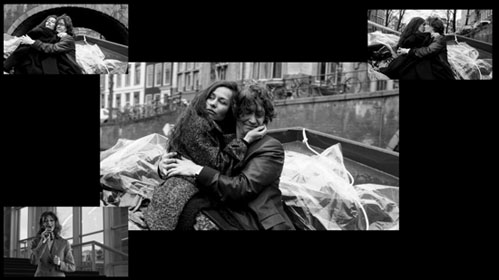
This is an example of the format we used during editing. Each picture represents one of the 5 screens that will be in various locations throughout the theater. The “C” screen is not in use in this example.
The real difficulty in this project was creative. The opera doesn’t really have a clear narrative like a traditional opera. It’s more fragments of ideas that all relate to a theme. Hal Hartley, the director of the show, came up with a separate story for the film that was inspired by the ideas in the opera. But while there’s a clear relationship between the two, the film is definitely not just an illustration of what the people are singing about on stage. And I usually had no idea what anyone was singing about anyway since we edited to MIDI recordings of the score.
As we started editing there were a lot more decisions to be made than usual. In a movie you can take for granted the fact that you’re going to have an image on screen most of the time. You might have a few seconds of black here and there, but in general movies tend to have something going on all the time. But with a stage production, you might not have any video at all for several minutes while the audience focuses on some activity on the stage. And if we do want to show some video, we have 5 different screens to choose from. And some portions of the audience can’t see some of the screens. Some of the audience sees the back side of some of the screens, so the image is in reverse and we can’t put text on those screens. It was all very tricky. Read more →


